
American General Trucks For Sale
Compare American General (AM General) military trucks. Review M35 and M939 specs, payload, driveline, and options to match off-road and utility jobs.
Learn moreBrowse American General Trucks by Category
Have american general truck to sell? List it here to reach thousands of buyers.
About American General Trucks
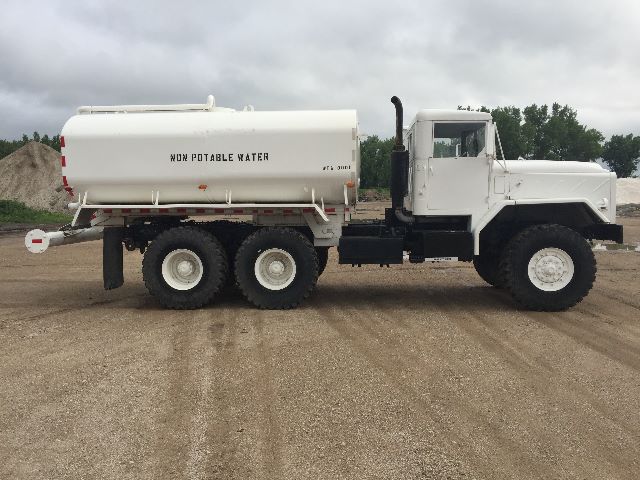
These chassis are bought for access and durability. High ground clearance, deep fording capability, and 6x6 traction make them strong fits for oilfield, forestry, utility line work, ranch operations, disaster response, and brush or water-tender conversions. Cargo models offer troop-seat stake bodies that convert to flat work decks, tractor variants like the M931 handle yard and lowboy duties, and short-wheelbase configurations help in tight timber or pipeline rows. Tire formats include dual 11.00R20s or super-single 14.00R20s, with CTIS on many A2 trucks to fine-tune footprint from pavement to soft ground.
Trade-offs are real. Most trucks are geared for off-road torque, not speed, so typical cruise sits in the 45-58 mph range depending on engine, transmission, and axle ratio. Ride is firm, cabs are basic, and noise levels are higher than civilian highway tractors. Brake systems range from air-assisted hydraulic to full air; later units may have ABS. CTIS improves traction but adds plumbing that needs upkeep. Electrical systems are usually 24V, so adding 12V accessories calls for converters or dedicated circuits. Check your state for CDL thresholds at or above 26,001 lb GVWR and any air-brake or use-based exemptions. Emissions and titling of ex-military vehicles also vary by state and intended use.
Selection should follow the job. For mixed highway and site work, the M939A2 with the Cummins 8.3, Allison automatic, super singles, and CTIS offers the best balance of drivability and off-road bite. For budget-duty ranch or fire-reserve service at lower speeds, an M35A2 is simple and field-serviceable; the A3 brings easier driving with the automatic and CTIS. Tractor variants suit towing and winch work, while cargo or dump conversions handle materials and water tanks. On inspection, focus on frame straightness and corrosion, brake condition and air leaks, axle and pinion seals, transfer-case function, CTIS integrity, winch operation, tire age and casing condition, and wheel type and safety practices for multi-piece rims. Parts support is strong through surplus channels and common-component suppliers, but plan your tire, wheel, and brake service strategy before the first job.
Frequently Asked Questions
What are the common American General truck models and how do they differ?
The most common platforms are the M35 2.5-ton series and the M939 5-ton series. M35A2 trucks typically use a multifuel inline-six with a 5-speed manual and a 2-speed transfer case. The M35A3 upgrade program added a CAT 3116, an Allison automatic, super-single tires, and CTIS. M939 trucks come in cargo, tractor, and specialty variants; many A0 and A1 units use the Cummins NHC-250 with an Allison automatic, while A2s generally feature the Cummins 6CTA 8.3 turbo, Allison automatic, and CTIS for tire pressure control.
Do I need a CDL to drive an American General truck?
CDL requirements depend on GVWR and use. Many American General 6x6 trucks exceed 26,001 lb GVWR, which commonly triggers CDL requirements for commercial use. Some states require an air-brake endorsement for vehicles with full air systems. Exemptions can exist for farm, fire, or private use, but they are state specific. Always confirm with your state DMV or DOT before purchase and registration.
How fast do these trucks go and what fuel economy should I expect?
They are geared for torque and terrain, not highway speed. Typical cruise is 45-58 mph depending on engine, transmission, and axle ratio. Fuel economy generally falls in the 5-10 mpg range, with autos and larger tires trending toward the lower end. Re-gearing, larger tires, or auxiliary overdrives can improve road speed but may reduce gradeability.
Are parts and service readily available for American General trucks?
Yes. Drivetrain components come from mainstream suppliers like Cummins, Caterpillar, Allison, Spicer, and Rockwell, and many wear parts are stocked through heavy-duty distributors and surplus vendors. CTIS components, 24V electrical parts, and military-specific hardware are available through specialty suppliers. Plan ahead for tire and wheel service, especially if the truck has multi-piece rims that require specific safety procedures and equipment.
What should I inspect before buying an ex-military American General truck?
Verify frame integrity and corrosion, brake condition and air or hydraulic leaks, transfer-case and axle operation, steering play, and winch or PTO function. Test CTIS for leaks and proper mode switching if equipped. Check tire age and sidewall condition, wheel type and serviceability, and look for seepage at pinion and hub seals. Review title paperwork and any state requirements for converting military surplus to on-road use, and confirm that lighting and reflectors meet DOT standards for your intended application.