
Agriculture Trailers For Sale
Browse agriculture trailers built for farm equipment, hay, inputs, and bulk transport with the deck, axle, and suspension specs buyers compare.
Learn moreBrowse Agriculture Trailers by Make
Have agriculture trailer to sell? List it here to reach thousands of buyers.
About Agriculture Trailers
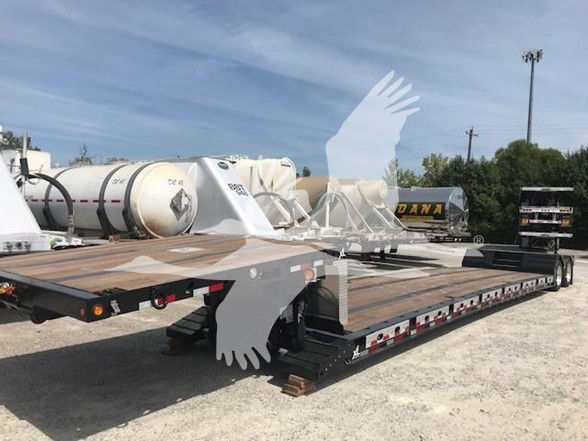
For machinery transport, the key specs usually start with overall length, main deck length, loaded deck height, and rated capacity. A 53-foot configuration with a detachable or removable gooseneck is common for larger equipment because it simplifies loading and gives more usable deck space. Width is typically 102 inches, but the real usability comes from deck design, outriggers, ramp transitions, and ground clearance. Apitong flooring, steel perimeter beams, chain drops on close centers, and multiple D-rings are all practical details that matter when securing uneven or high-value farm equipment. Buyers hauling taller machines should pay attention to deck height and neck design to stay manageable on rural roads, bridges, and seasonal routes.
Running gear matters just as much as deck layout. Tandem axle setups are common, often with air ride suspension for better load stability and less shock to equipment during transport across uneven pavement and farm access roads. Tire size, axle spacing, kingpin setting, ABS configuration, and raise-lower suspension controls all affect maneuverability, loading, and legal compliance. If the trailer may need to grow with the operation, look for flip axle connections, future axle provisions, and a frame built for higher distributed weight. On farm and mixed regional hauling, details like pull-out lights, toolbox placement, mud flaps, and durable lighting packages can make a real difference in uptime and safety.
The best agriculture trailer is the one matched to the heaviest and most awkward load in the fleet, not the lightest one hauled once a month. A hay operation may prioritize deck length and straightforward loading, while a row-crop or custom harvest operation may need low deck height, strong tie-down coverage, and suspension control for expensive equipment. Buyers comparing agriculture trailers should think in terms of equipment dimensions, field-to-field mobility, seasonal road conditions, securement points, and serviceability. A trailer that is easy to load, properly rated, and built with practical farm-spec features will usually outperform a cheaper unit that only looks right on paper.
Frequently Asked Questions
What types of trailers are commonly sold as agriculture trailers?
Agriculture trailers can include lowboy trailers, detachable gooseneck trailers, equipment trailers, implement trailers, and other heavy-duty farm hauling platforms. Many are designed to move tractors, combines, sprayers, tillage tools, and support equipment. The exact design varies by operation, but most buyers in this category are looking for the right balance of capacity, deck height, loading angle, and securement points for farm machinery.
What specs matter most when buying an agriculture trailer for farm equipment?
The most important specs are rated capacity, deck length, deck height, width, axle configuration, suspension type, and tie-down layout. Capacity determines what equipment the trailer can legally and safely carry. Deck height affects transport height and stability. Deck length and neck design determine whether the machine fits without poor weight distribution. Buyers should also inspect flooring material, crossmember spacing, D-rings, chain drops, ramp design, and any future axle or flip axle provisions.
Is air ride suspension a good choice for an agriculture trailer?
Air ride suspension is often a strong choice for hauling farm equipment because it helps reduce vibration and shock transfer to the load. That can be valuable when moving tractors, sprayers, or other high-value machines with sensitive components. Air ride can also improve loading flexibility when paired with raise-lower controls. For buyers running mixed pavement, county roads, and rough farm access routes, it is often a practical upgrade over more basic suspension setups.
How do I know if a detachable gooseneck agriculture trailer is the right fit?
A detachable gooseneck trailer is usually the right fit when you regularly load heavy or low-clearance equipment and want a safer, lower loading angle. It is especially useful for tractors with attachments, self-propelled machines, and equipment that is difficult to back onto a fixed deck. Buyers should compare neck style, swing clearance, kingpin setting, deck length, and loaded deck height to make sure the trailer matches both the equipment and the tractor pulling it.
What should I look for in securement and deck construction on an agriculture trailer?
Look for a trailer with enough tie-down points for the equipment you actually move, not just the minimum needed for a basic load. Chain drops on close centers, multiple D-rings, strong outer beams, and durable hardwood flooring such as Apitong are common signs of a trailer built for real equipment work. Good deck construction helps with load stability, long-term durability, and easier securement of machines with different wheelbases, track widths, and attachment configurations.