
Ford Dump Trucks For Sale in Florida
Shop Ford dump trucks for sale in Florida, from light-duty landscape bodies to medium-duty dirt dumps with gas or diesel power.
Learn more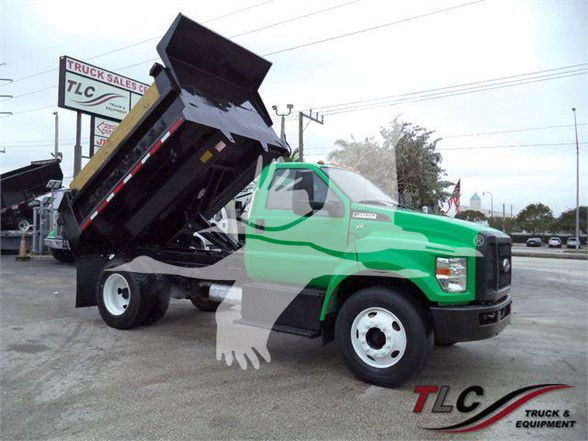
Have ford dump truck to sell? List it here to reach thousands of buyers.
About Ford Dump Trucks in Florida
Body setup matters as much as the chassis. A buyer comparing Ford dump trucks should look closely at body length, side height, floor thickness, hoist type, tailgate design, and tarp system. Landscape bodies often have taller sides for brush, trash, and storm cleanup, while dirt or mason dumps usually use lower steel sides for heavier material like sand, gravel, and broken concrete. Common features include barn doors or top-hinged tailgates, cab shields, pintle hitches, electric brake hookups, and underbody or PTO hydraulics. Aluminum dump inserts reduce weight and resist corrosion, while steel bodies generally hold up better in abrasive aggregate and demolition work.
Ford dump truck powertrains vary by model and age, with gas V8 and V10 engines appearing often in light and medium-duty applications, alongside diesel options in Super Duty chassis. In Florida, a 4x2 dump truck is a practical fit for paved-road service, landscape supply delivery, and urban jobsite access, but buyers should still pay attention to axle ratings, spring capacity, brake condition, and hydraulic performance in stop-and-go service. For trucks operating around coastal areas, corrosion on the body, hoist, wiring, and bed crossmembers deserves a close inspection. Fleet-maintained units can be a strong value if service records confirm consistent upkeep on transmission, cooling system, front-end wear items, and dump hydraulics.
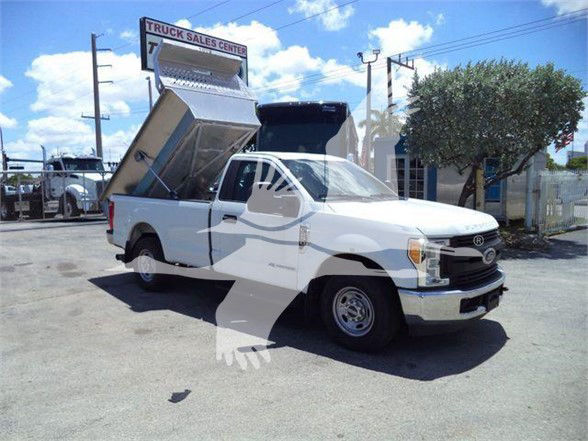
A good Ford dump truck match depends on material type, payload target, and how often the truck tows additional equipment. An F-350 with a compact dump body or insert can be ideal for crews hauling tools, mulch, and light debris, while an F-650 with a 10-foot or larger dump body is better suited for heavier daily cycles and jobsite material movement. Buyers should confirm GVWR against CDL requirements, verify body and hoist operation under load, and check if the truck is configured for landscape work, dirt hauling, or general contractor use. The right spec is less about badge size and more about bed volume, payload capacity, turning radius, and how the truck fits the route and workday.
Frequently Asked Questions
What is the difference between a landscape dump and a dirt dump on a Ford truck?
A landscape dump usually has taller sides and is built to carry lighter, bulky material such as brush, yard waste, mulch, and trash. A dirt dump or mason dump typically has shorter, heavier-duty sides and a stronger body for dense material like sand, gravel, asphalt millings, and broken concrete. The intended material changes the ideal body design, hoist setup, and payload expectations.
Are Ford pickup-based dump trucks practical for commercial work?
Yes, pickup-based Ford dump trucks such as F-250 and F-350 models are widely used for landscaping, maintenance, light municipal work, and small contractor fleets. They are easier to park, cheaper to operate than medium-duty trucks, and often do not require the same licensing considerations as larger chassis. The tradeoff is lower payload, smaller body volume, and less durability for constant heavy aggregate hauling.
What should I inspect first on a used Ford dump truck?
Start with the dump body and hydraulic system. Check for rust, cracked welds, bent rails, floor damage, leaking cylinders, hoist wear, and tailgate alignment. Then verify the chassis GVWR, spring pack condition, brake wear, tire load rating, and transmission operation. On Florida trucks, inspect wiring, bed supports, and hydraulic components for corrosion, especially if the truck has worked near the coast.
Is gas or diesel better in a Ford dump truck?
Gas engines can make sense for lighter-duty dump trucks that run shorter routes, lower annual miles, and more municipal or landscape-style service. They are often simpler and less expensive to maintain up front. Diesel power is generally preferred when the truck regularly carries heavy loads, operates at higher mileage, or needs stronger low-end torque for frequent hauling and towing. The better choice depends on duty cycle more than fuel type alone.
Do I need a CDL for a Ford dump truck?
Not always. Many Ford dump trucks, especially pickup-based and some lighter medium-duty models, can fall below CDL thresholds depending on GVWR and combined weight rating. Once the truck or truck-and-trailer combination exceeds applicable weight limits, CDL rules may apply. Buyers should verify the door sticker GVWR, any trailer they plan to tow, and Florida registration and licensing requirements before purchase.